If It’s on an Exchange, It’s an IOU
Written by Bryan Lutz, Contributor at The Sovereign Capitalist:
What do you own when you log in to an exchange and see a balance?
A promise. That’s all…
Just like a bank deposit, the number on the screen is a claim on someone else’s balance sheet. You don’t technically hold the coins. Most days the promise holds. The trouble is how it breaks: all at once, with no warning.
For example,
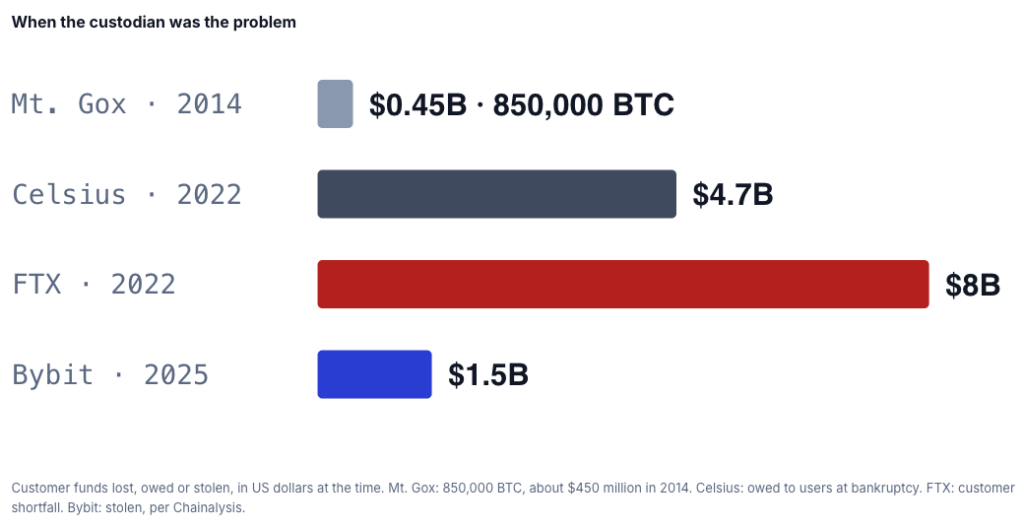
Celsius froze every withdrawal on a Sunday in June 2022, owing its users about $4.7 billion. FTX was a top-five exchange one week and in bankruptcy court the next, with a customer shortfall of about $8 billion. In February 2025, hackers took about $1.5 billion from Bybit in a single hit, the largest crypto theft on record. Go back to 2014 and Mt. Gox lost 850,000 bitcoin.
Customers found out the same way you would. They clicked Withdraw and nothing happened.
Is it getting better? No. And it isn’t only the exchanges.
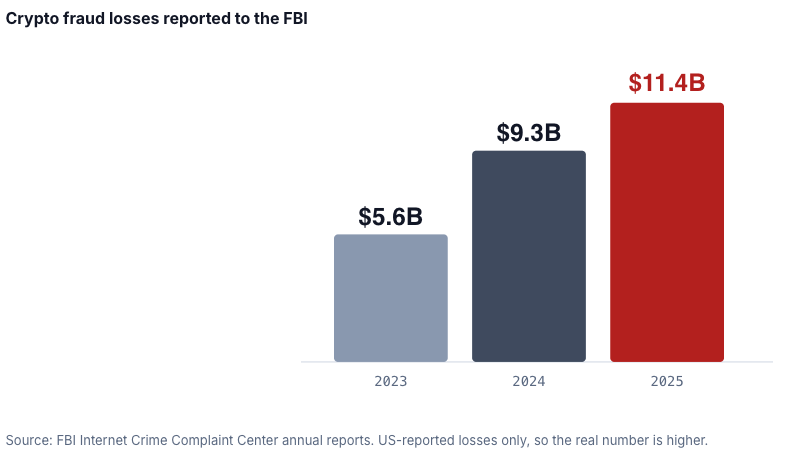
The FBI logged 181,565 crypto complaints in 2025. Reported losses reached $11.4 billion, up from $9.3 billion in 2024 and $5.6 billion in 2023. The average reported loss was $62,604.
Moving your coins to a wallet app on your phone doesn’t solve it. Chainalysis counted 158,000 personal wallet compromises in 2025. A wallet on your everyday phone or laptop shares that device with your email, your browser and every app you’ve ever downloaded.
So the exchange can fail you, and your everyday devices can fail you. The keys need to live somewhere that is neither.
What does that look like?
An old laptop that never goes online. It creates the wallet, holds the keys and signs transactions and nothing else…
Your normal computer and your phone run watch-only wallets. They show the balance and make receive addresses. They can’t spend.
To spend, you carry an unsigned transaction across on a USB stick, sign it offline, and carry it back. The keys never cross.
That’s because the laptop never becomes the wallet. The seed is the wallet. If the laptop dies, you restore from the seed on a clean machine.
—
Want the full guide? We wrote the whole setup down in the Home-Rolled Bitcoin Self-Custody Playbook: 18 pages, a spare laptop, free software, and a recovery drill to run before you trust it with a single real coin. It’s 99 cents for Black Friday.
Get the Home-Rolled Bitcoin Self-Custody Playbook here.
For information only. Not financial advice. Test every procedure with a trivial amount before trusting it with significant funds.